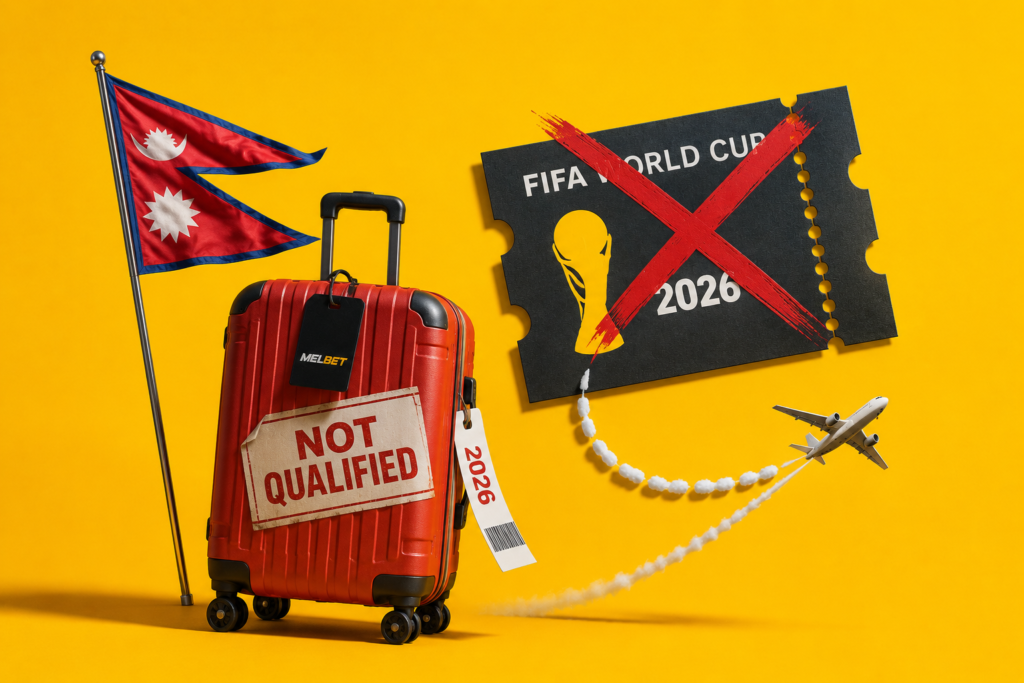

Here’s a surprising fact: at the summit of Everest, the oxygen level is only one-third of normal, but even there it’s easier to breathe than it is for a Nepalese fan watching the local federation officials. When the FIFA World Cup 2026 was expanded from 32 to 48 teams, many in the heart of the Himalayas rubbed their hands in anticipation: “Now our team is sure to advance. The Asian Confederation was allocated as many as eight and a half spots—more than ever before.” But Nepal’s national soccer team once again found itself left out of the invite list. And it’s not a matter of bad luck or a referee who disallowed a clear goal. It’s simply that the very soil of domestic soccer is still too barren for triumphs on the world stage—though it is rich in corrupt officials.
For anyone following Nepal football, the outcome was disappointing but hardly unexpected. While savvy tipsters study the odds for the tournament’s quarterfinal showdowns by visiting a betting website in nepal, the Himalayan team is tallying its colossal losses. Let’s break down exactly why Nepal World Cup qualification failed yet again, and whether the country has a chance to turn things around by 2030.
A chronicle of the collapse in facts and figures
While the first round, in which Laos was defeated, gave fans a false sense of celebration, the AFC World Cup qualifiers in Group H quickly brought everyone back down to earth. Recall that the Nepal national football team’s qualifying campaign for the 2026 World Cup began with a glimmer of hope.
At the start, the “Mountain Lions” outplayed the Laotians. A 1–1 draw at home was followed by a 1–0 away victory, resulting in a 2–1 aggregate win. However, the next stage turned into a prolonged slump for the team. Fans who had a melbet app download to track live odds immediately noticed a sharp decline in the underdog’s form. In a group with the UAE, Bahrain, and Yemen, the standings delivered an uncompromising verdict:
- 6 matches;
- 0 wins;
- 1 draw and 5 losses with a dismal goal difference (2–20).
The Emiratis methodically tore apart the Nepalese defense (4–0), while Bahrain’s “Reds” took the score all the way to 5–0. The final match against Yemen (2–2) slightly brightened the bleak picture. However, by the final round, the international season had lost all competitive significance for Nepal.
The Root of the Problem: It’s Not the Fields, It’s the Officials
Weakness on the field is just the tip of the iceberg. As the saying goes, a fish rots from the head down, and in Nepalese soccer, that head is called ANFA (All Nepal Football Association). In recent years, the organization has been mired in constant scandal, facing endless lawsuits and accusations of corruption. It reached the point where, on June 24, 2026, FIFA suspended the All Nepal Football Association’s (ANFA) membership with immediate effect. The reason cited was “flagrant violations of the FIFA Statutes related to third-party interference.” Behind this bureaucratic wording lies a genuine tragedy: a long-standing confrontation between ANFA and the National Sports Council of Nepal over control of the nation’s most popular sport.
Back in March 2026, the government agency had already suspended the federation’s activities for three months, claiming that the leadership elections did not comply with local legislation. World soccer’s governing body, for its part, demands that national organizations operate independently of government institutions. The result has been endless squabbles, postponed congresses, and complete stagnation. As one commentator aptly put it: “A handful of officials from the National Sports Council were unable to set aside their ambitions just to allow the vote to take place.”
The consequences of the sanctions are catastrophic:
- Nepalese clubs and national teams of all age groups have been barred from participating in international tournaments;
- ANFA has lost access to FIFA development programs, training courses, and financial assistance. “This affects our players, depriving them of opportunities and shattering the dreams of aspiring soccer players,” acknowledged the organization’s press secretary, Suresh Shah;
- The National Sports Council has escalated the situation further by denying ANFA President Pankaj Bikram Nembang and Secretary General Kiran Rai permission to travel abroad, thereby preventing them from attending the ongoing FIFA World Cup.
It turns out that while bureaucratic battles rage at the top, young talents are missing their chance to compete internationally. These internal power struggles are isolating young talents from global experience, driving the final nail into the coffin of the country’s already meager budget and shattered soccer infrastructure.
An Example from Elsewhere as a Source of Envy
While Nepal languishes in the 170s of the FIFA rankings, other developing Asian countries are rapidly closing the gap. Take a look at Indonesia or Tajikistan—countries that until recently were considered easy opponents are now advancing to the decisive stages of qualifying.
Take another example – India, which ranks 102nd in the FIFA rankings, compared to Nepal’s 175th. The Indian Super League (ISL) has attracted significant investment, established a solid structure, and elevated local club soccer to the international level. In Nepal, however, the two main leagues – A Division and the Nepal Super League (NSL) – have been fighting for dominance for years, instead of working toward a common goal. In 2022, ANFA even canceled the season of a new tournament due to legal disputes with top-division teams. So while our neighbors are experiencing consolidation and growth, here we have endless infighting.
Their secret is simple:
- Long-term investment in youth development.
- Bringing in high-quality European technical experts.
- Strict government oversight of soccer finances.
If Nepal wants to make a real bid for a spot in the 2030 or 2034 World Cup, the authorities will have to get rid of ineffective officials, revive the league, and create the basic conditions for training. Otherwise, the national team will remain the main source of easy points for the Asian powerhouses.