
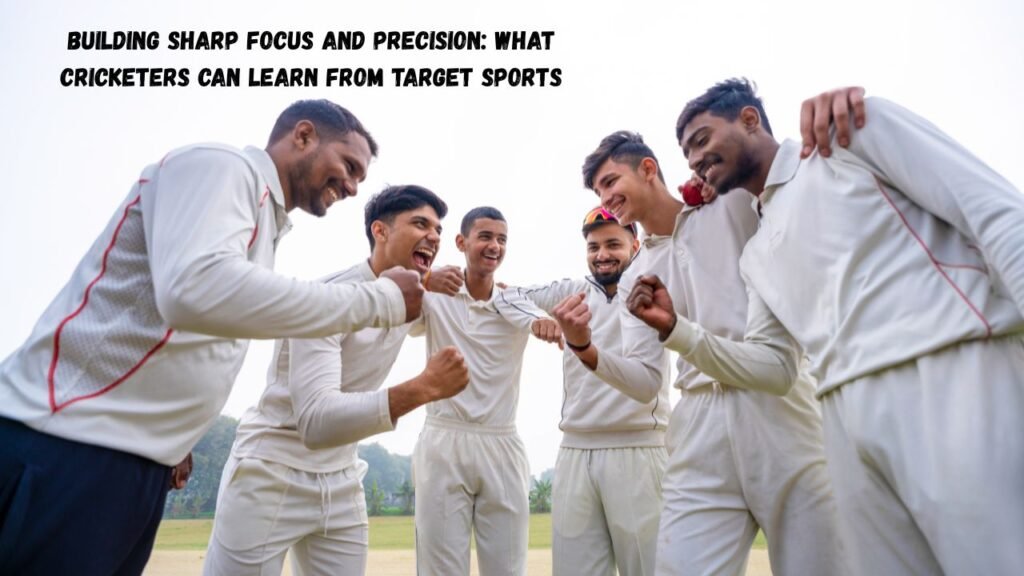

When a bowler aims for the base of off-stump in the final over of an IPL match, the margin for error is measured in millimeters. The same narrow window applies to a batter guiding a 145 km/h delivery fine of short third man. While physical conditioning and traditional net sessions build foundational strength and technique, sharp performance often comes down to micro-adjustments made under intense pressure.
Professional athletes across sports are increasingly turning to cross-training methods to sharpen their visual tracking, hand-eye coordination, and mental focus. Precision target games offer a low-impact environment to train the brain and hands to work together with high consistency.
The Mechanics of Fine Motor Control in High-Pressure Sports
Cricket requires a combination of explosive gross motor movement and delicate fine motor skills. A bowler’s run-up involves full-body exertion, but the release point depends on subtle wrist angles and fingertip pressure. Similarly, a wicketkeeper reacting to a faint edge relies on immediate hand-eye alignment.
Target sports isolate these fine motor skills by removing heavy cardiovascular demands. When you train to hit a tiny physical target repeatedly, your brain builds tighter neural pathways for visual depth perception and motor planning. This training carries over to field awareness on the pitch, helping players track the ball earlier and make faster adjustments during quick play.
Off-Field Precision Training for Hand-Eye Coordination
Adding static target practice to a weekly training routine helps keep hand-eye coordination sharp on rest days. It allows players to work on control, stance stability, and smooth release dynamics without placing heavy physical wear on shoulder joints or knees.
Setting up dedicated target sessions indoors allows for quick, focused practice blocks throughout the week. Using precision equipment like target darts offers a practical way to train fine motor control and visual targeting without putting heavy physical strain on joints after a tough match. The deliberate rhythm of sighting a small mark, balancing your stance, and executing a repeatable throw directly mirrors the focus needed at the bowling crease.
To get the most out of target-based cross-training, focus on these fundamental habits during practice:
- Fixate early: Pick out a specific point on the target rather than looking at the general area.
- Control your breathing: Time your release at the natural pause between exhaling and inhaling to minimize torso movement.
- Maintain a stable base: Keep your lower body grounded so your arm movement remains isolated and repeatable.
- Follow through cleanly: Avoid jerking your hand back after release; complete the motion smoothly every time.
Developing a Reliable Pre-Shot Routine
Consistency in sports is rarely an accident. Top-tier cricketers follow strict pre-ball routines to clear mental noise before facing or delivering a ball. A batter might tap their bat three times, adjust their gloves, and look at the sight screen to reset their focus between deliveries.
Target sports rely entirely on this type of mental discipline. Because every attempt takes place from a fixed position, success depends on maintaining identical preparation rituals. Practicing a structured three-step pre-throw sequence helps train your mind to enter a state of ready focus on command.
When faced with a tense situation on the cricket field, coming back to a familiar mental checklist helps lower your heart rate and prevent rushing. Over time, your body learns that completing the routine leads directly to calm, controlled execution.
Tracking Metrics and Heat Maps for Continuous Improvement
Modern cricket analytics rely heavily on pitch maps, wagon wheels, and release-point data to measure consistency. Coaching staff monitor where a bowler lands the ball over a six-ball over to evaluate accuracy under different match conditions.
You can apply this exact analytical mindset to off-field target training. By tracking your grouping accuracy over a series of sessions, you can identify performance patterns and physical tendencies. Do your shots drift right when you get tired? Does your release point drop when you rush your routine?
Mapping your shots creates clear visual feedback. Seeing tight clusters on a target board builds confidence in your physical execution, while scatter patterns show exactly where your mechanics broke down. Tracking these small details helps cultivate the same methodical approach used by top sports analysts to refine player performance.
Integrating Target Drills Into Your Weekly Schedule
You do not need hours of extra field time to improve your mental sharpness and physical precision. Short, focused sessions of 15 to 20 minutes of target work three times a week provide plenty of repetition without causing mental fatigue.
Pairing low-impact precision training with standard strength, conditioning, and net sessions builds a balanced skill set. By treating visual tracking and fine motor control as skills that require regular maintenance, you develop greater calm, consistency, and control when stepping out onto the field.